Sunday, 8 February 2015

Friends of St Annes Palace - Community Day

Thank you to Friends of St Annes Palace, the Freemasons, everyone who attended and especially all those who were interested in my work and Art Circle. 

Many thanks too to Eloise.  Your beautiful picture reminds me of the song, "Always look on the bright side of life" which pretty much sums up the day and the lovely people who give so much to our community to make things better.  


The links below will take you to more information about the Palace's history & use and the aims of the Friends of St Annes Palace.

link to The Palace St Annes
link to Friends of St Annes Palace

Friday, 6 February 2015

Art Circle: 2 into 3 will go...

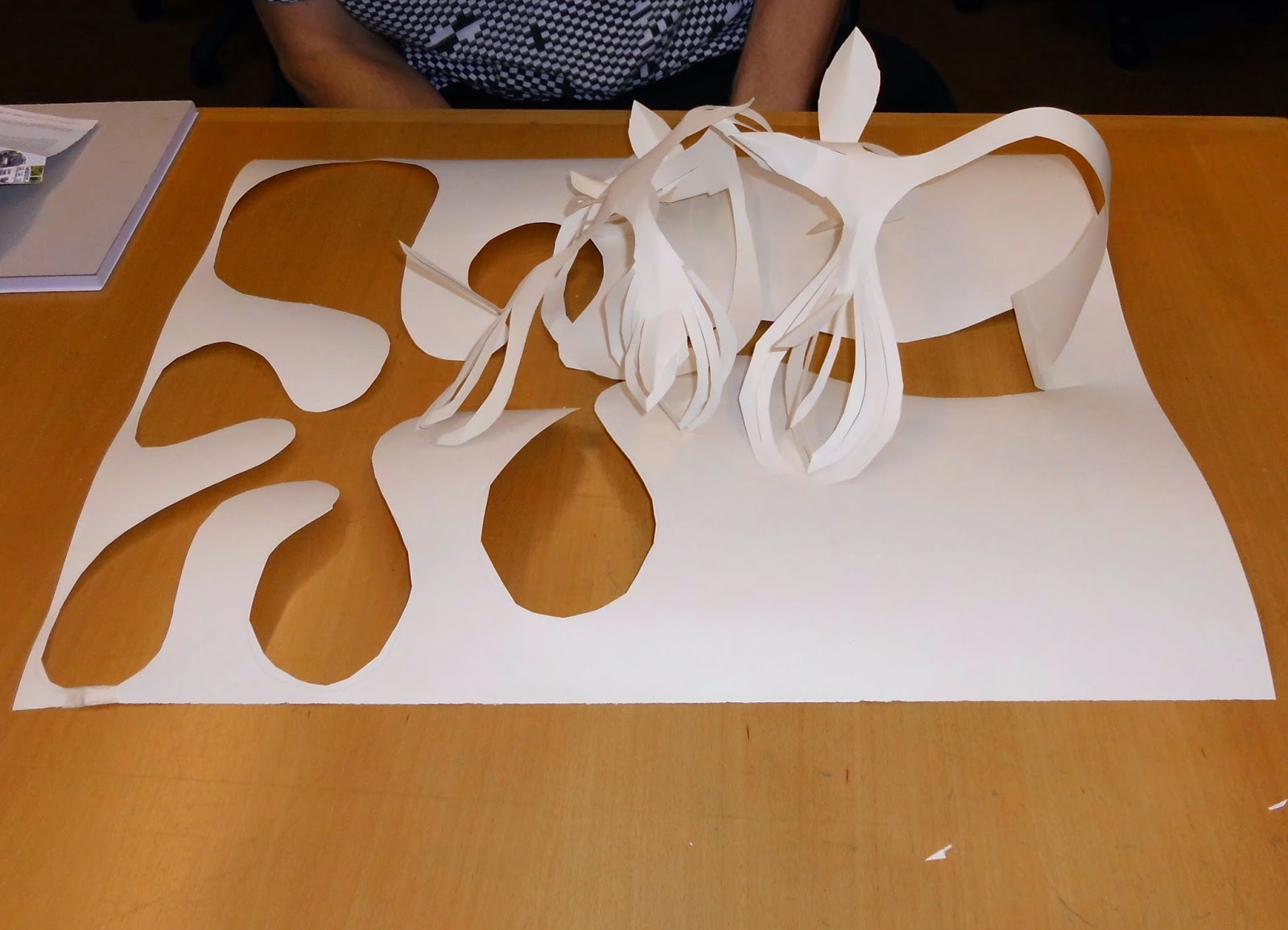
We looked at different qualities of paper and experimented.

One piece of paper, plain or printed was folded / scrunched / torn / cut (with scissors) / rolled and manipulated; all the page was included nothing was discarded; and sculptures began to appear...

This week was all about the process.  
We didn't look at other art work first so this is the first time the group will see how well they did next to artists who work this way.

Next week we'll bring out the knives...

Simone:  "Footprints in Snow"

Peter Callesen:  Hold on to Me Yourself
Peter Callesen
Peter Callesen:  Cowboy 2006
link to Peter Callesen

by Angie

by Richard
by Jeanette
by Graham
by Jeanette
Jennifer Khoshbi

Sue Blackwell:  Through the Looking Glass

Thursday, 29 January 2015

Art Circle: an exploded shed and c.art.ed & p.arty return...

Around 2002, I developed a method of making "difficult" artwork more accessible to new audiences.  c.art.ed, contemporary art in education went into schools and p.arty, engaged members of the public in community settings.  This week the lovely folk who came to Art Circle at St Annes Library shared the experience too. 

I'm not going to include images of the session this time because I will be taking a selection of artworks into Lytham Library in the future to share with the people of Art Circle who meet there and I don't want to pre-empt thoughts and ideas.
So apologies for that and here's work by two "revolutionary" artists or artists who work with circles instead.


 Cornelia Parker:  Thirty Pieces of Silver (silver & copper wire)  1988-9
Thirty Pieces of Silver:  detail
link to more info: Thirty Pieces of Silver

Cornelia Parker's work seems to defy gravity.  Thirty Pieces of Silver hovers about a foot above the floor so you look down to view it.  The shadows of the piece are part of the installation which move as you move around the work.  Captivating...  
Parker also depicted an exploded shed which is as eerie as it is captivating.  Do check it out on the Tate's website via this link.  "an exploded view" 

Andy Goldsworthy:  Snow Circle (snow) 1987 Japan  
Andy Goldsworthy studied at the University of Central Lancashire so a local artist too...
[He now lives in Scotland.]


If you would like me to bring c.art.ed or p.arty to your place, please contact me.

The sessions work beautifully with Arts Award and covers PSHE (personal, social and health education) and Citizenship in the National Curriculum from Year 5.  GCSE and A Level students have also used the session as a starting point for making their own work. 

Thursday, 22 January 2015

Art Circle at Lytham Library...

Art Circle at Lytham Library...

starting Wednesday, 11th February 2015
11 - 12.30 
Cost:  £2.50 (some weeks slightly more depending on materials)


Art Circle at St Annes Library will continue on Thursdays, 11 - 12.30
Cost:  £2.50 (some weeks slightly more depending on materials)


Still Life, charcoal & goodbye to grids... for now

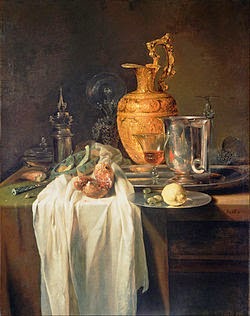
We looked at a very brief history of still lifes.  How they evolved from being portraits of wealth to vehicles to develop individuals' visual language:  from photorealism to every other art movement we have given a title to.  
Still lifes are a low cost, accessible way to develop drawing and painting skills.

Willem Kalf (1619–1693), oil on canvas
Paul Cezanne:  Still Life with an Open Drawer 1877–1879 
Piet Mondrian:  Still Life with Ginger Pot (1911)
We approached ours by using a straight edge to enable measuring heights and widths by sight and determining differences from the vertical and the horizontal.  Once the drawings started to evolve they became as individual as those who made them.  

We went on to explore how charcoal can add depth by smudging and redrawing and finally we gave definition by carefully adding white pastel.

The finished pieces were "revealed" by removing the "frame" of masking tape. 


Beautiful results - well done everyone!

Next time we're going to consider how and why artists work in a particular way.  Plenty of room if you would like to join us...